

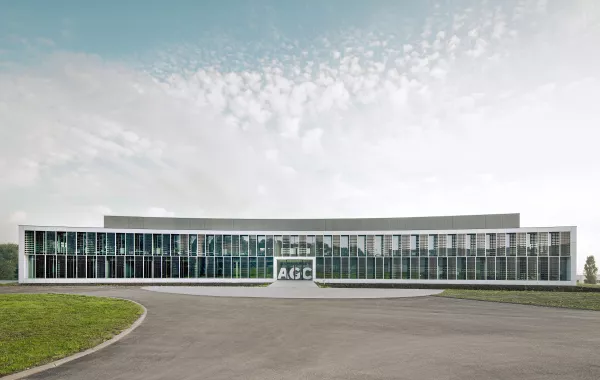
InnovationATC1
2021-03-09
The world around us is changing fast: smarter and greener cities, advanced connectivity and new models of mobility. The rising demand for smart cities and sustainable living is being supported by major advances in technology - and glass is playing its part.
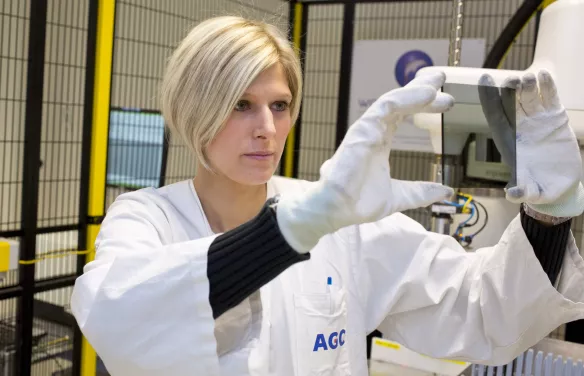
AGC’s glass production processes now consume less energy than ever before thanks to the new technologies and benefits issuing from Industry 4.0. AGC glass itself has reached unprecedented levels of insulation and solar control performance, while constantly improving ways to connect people.

Sustainable buildings

Buildings account for around 40% of energy consumption and CO2 emissions, and AGC has been working on sustainable glass solutions for years. Vacuum insulating glass and smart-tinting glass are two of the energy-efficient solutions AGC has recently developed as part of its efforts to evolve towards comfortable zero carbon buildings.

Sustainable energy

Not only can glass control energy, but it can also play a role in generating electricity. Our active glass featuring embedded PV cells and our solar mirrors for solar farms are becoming increasingly efficient in order to meet the need for power generated from renewable energy sources.

Connectivity

Smart cities require full connectivity. De-coated glass that lets through more telecommunication signals and invisible antennas on windows can help build tomorrow’s connected cities.

Industry 4.0 

In line with Industry 4.0, AGC is evolving into an industry driven by big data. This use of data leads to significant reductions in the energy consumption of our processes and to mass customisation.

AGC’s dedicated team of research and development experts 

Our Technovation Centre is focused on improving glassmaking processes and developing new glass properties and products. With more than 300 people and 19 different nationalities working together in Gosselies, Belgium, the centre boasts expertise in different glass-related fields such as glass melting, surface treatment, electronics, antennas, engineering, and more. consumption of our processes and to mass customisation.

See Also

A Czech landmark showcasing Imagin patterned glass

The Tomáš Baťa Memorial, designed by prominent Zlín architect F. L. Gahura and built in 1933, is a high point of Zlín functionalism. Severely damaged during the bombing of Zlín in 1944, the Memorial was rebuilt and repurposed in 1954 as the House of Arts, a concert hall and gallery. Decades later, the project to renovate the Memorial and restore it to its original form began in 2016 and finally, in 2019, the Tomáš Baťa Memorial was reopened to the public. The interior features a model of the Junkers airplane in which Tomáš Baťa met his tragic end in 1932.

Fineo – top performance in insulating glass technology

For the very best thermal and acoustic insulation, the only choice used to be triple glazing. But that’s a compromise: triple glazing makes for extremely thick glass, noticeably reducing light transmission.

Our commitment to sustainability

Climate change and the urgent need for more effective environmental protection are currently high on the public agenda. Industry needs to focus on designing products that are not only healthy, sustainable and recyclable, but also not harmful to the environment. Only then will we have a ‘green footprint’ that supports the biosphere instead of damaging it. Discover why glass is more environmentally responsible than ever before with Cradle-to-Cradle certification.