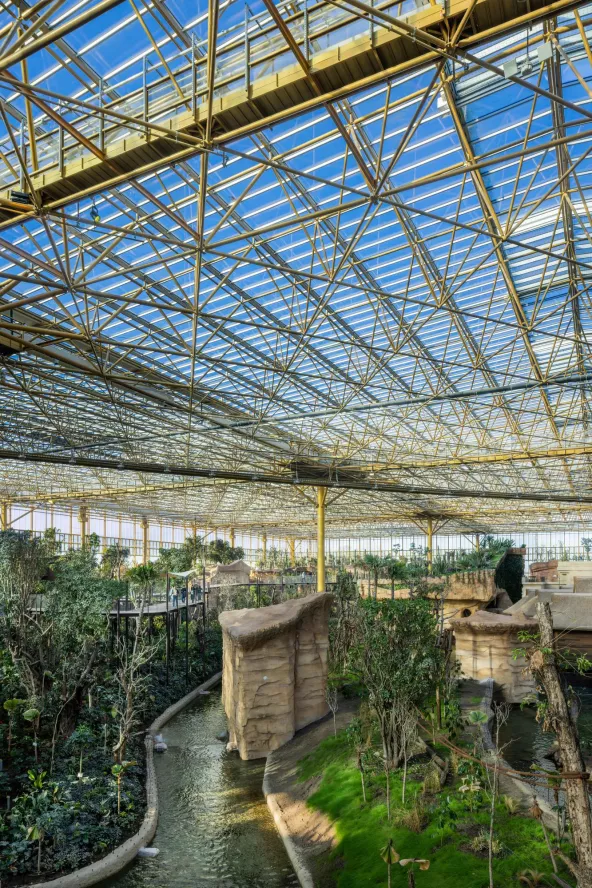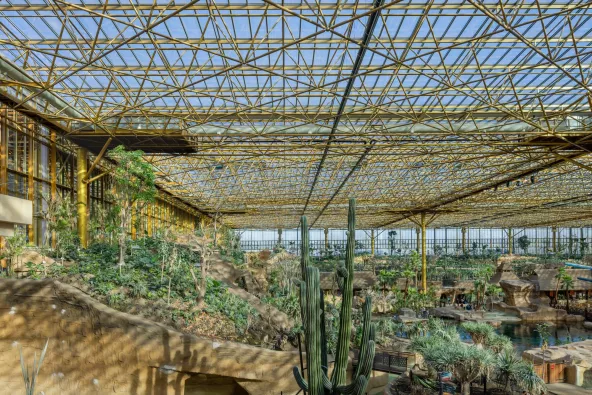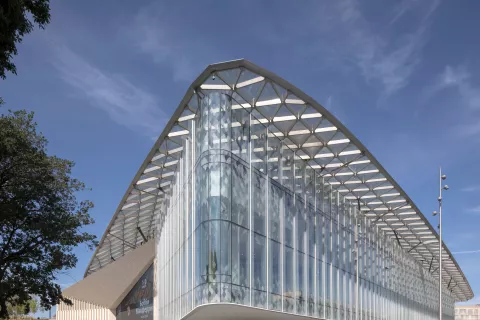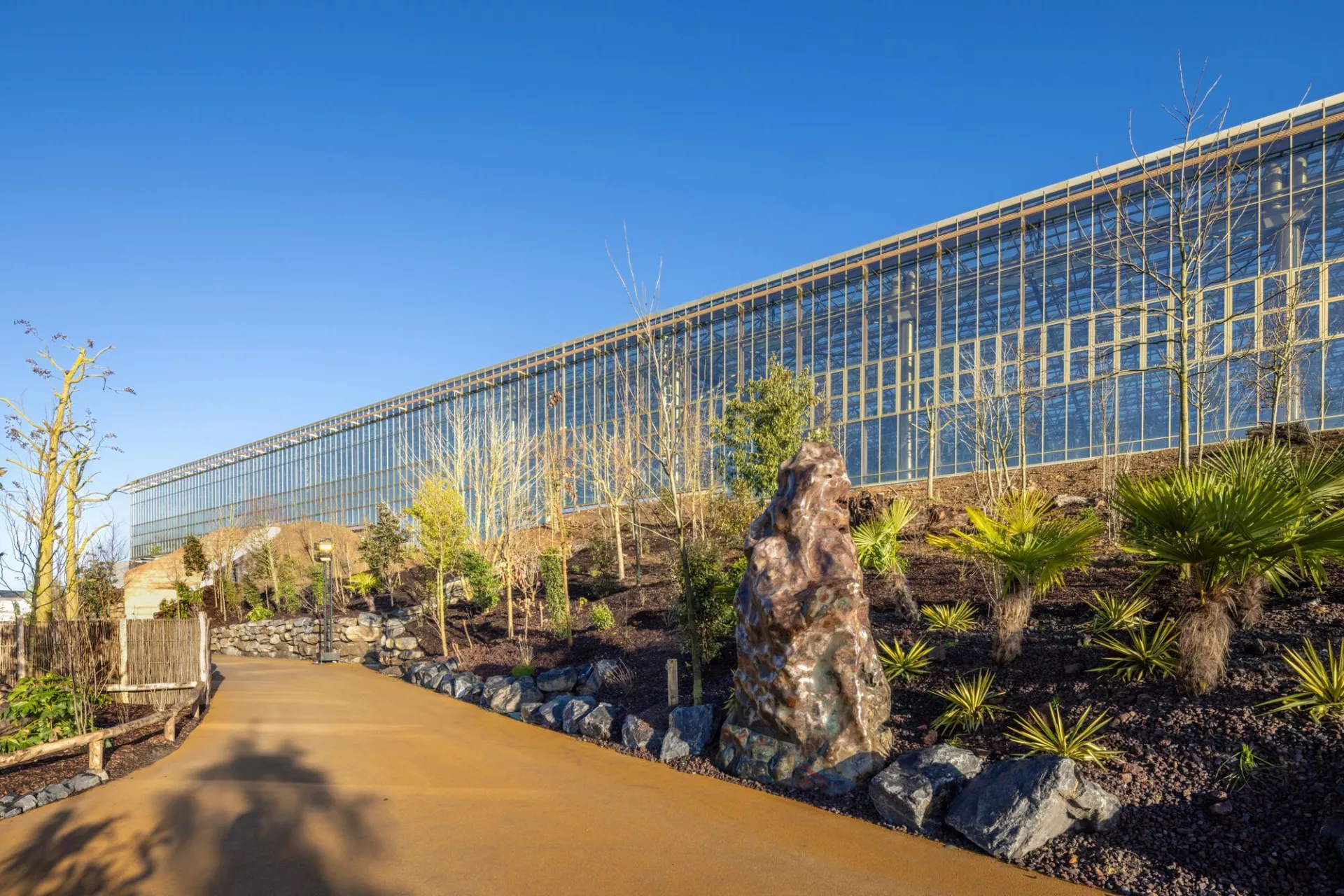

A new world has emerged beneath a stunning glass canopy at Pairi Daiza in Belgium . Edenya – the world’s largest tropical greenhouse and enclosed zoological ecosystem – covers 40,000 m² and rises 25 metres high. Designed as a bioclimate that harmoniously combines architecture and nature, this ambitious project represents an investment of more than €200 million and took three and a half years to complete.
Far more than a greenhouse, Edenya is a fully immersive Amazonian ecosystem and home to waterfalls, rivers, lush vegetation and a remarkable diversity of wildlife, including jaguars, sharks, manatees and primates.
At the heart of this achievement lies its most defining feature: a glass canopy specially designed to sustain life.
A world record in glass engineering
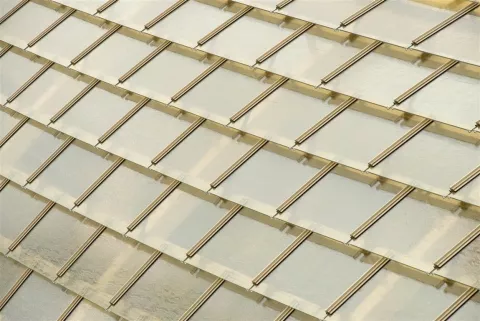
Edenya’s 4-hectare canopy is the world’s largest continuous double-glazed glass roof. Working in close collaboration with the project partners, AGC engineered a glazing solution capable of combining large spans, optimal daylight transmission and precise climate control.
The roof structure consists of 16 prefabricated modules, each measuring approximately 2,500 m². The modules were assembled on the ground and then lifted into place, taking just ten minutes per module. This modular approach accelerated the installation process while ensuring precision and safety at a height of 20 metres. The glass is fitted into a three-dimensional steel structure with a distinctive gold-lacquered finish, supported by 25 tree-like columns.
The result is a transparent canopy that looks light and elegant, yet delivers the very highest level of technical performance.
Custom-developed glazing for zoological environments
Edenya required more than standard high-performance glass. The tropical ecosystem beneath the roof demanded a carefully calibrated balance of insulation, solar control and UV transmission — all while ensuring visitor comfort and safety.
Unlike traditional horticultural glass, Edenya’s glazing delivers thermal performance five times higher than that of a conventional greenhouse system.
This superb insulation performance enables the building to naturally maintain a minimum temperature of 18 °C, significantly reducing heating requirements. The glazing minimises heat loss while limiting the risk of overheating — a crucial factor in maintaining a stable tropical climate.
UV transmission: enabling life under a glass canopy
A key innovation of the Edenya project is its custom-designed UV-regulating glazing.
Conventional solar control coatings typically block a large portion of UV radiation – but controlled UV transmission is essential for plant growth and animal wellbeing. AGC’s Coating on Demand service developed a coating to enable maximum beneficial UV transmission, while maintaining excellent insulation performance.
Stratobel UV+ laminated glass was used for the inner pane, ensuring:
- high UV transmission for animal and plant requirements
- 1B1 safety performance
- impact resistance suitable for zoological environments
This custom solution allows the flora and fauna beneath the canopy to thrive in conditions that closely replicate natural sunlight.
A benchmark for sustainable glass architecture
Edenya is more than a record-breaking structure — it’s a living ecosystem protected by advanced glass technology.
With this project, AGC clearly demonstrates how high-performance glazing can serve life itself: creating optimal conditions for biodiversity, ensuring safety and comfort, and contributing to a circular and energy-efficient future.
- Architecture & engineering: Pairi Daiza
- Greenhouse design & construction: Deforche Construction Group - Forzon